Film and TV drama
Lighting trainee
Also known as: Sparks trainee
What does a lighting trainee do?
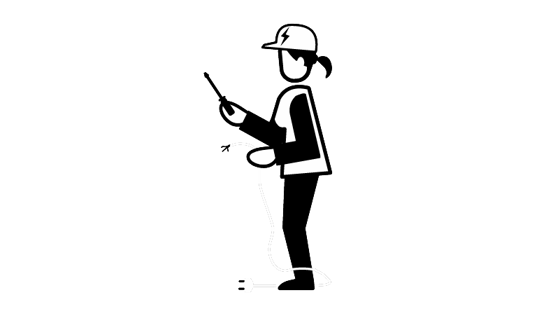
Lighting trainees spend a lot of time moving equipment. They get to set early and might help unload the gear. Following the instructions of the best boy (lighting coordinator) and the sparks (lighting technicians), they help set up for filming, under supervision.
They run errands. A spark will talk on the radio to the crew on the truck about what they need. The electrical trainee will then be sent to collect it. With supervision, they might help run cables and set up lights. They make the tea, or, rather, they create a good impression if they do.
Lighting trainees are not allowed to work alone, plug up or have significant responsibility. This is because working with electricity is dangerous if people have not been trained. Their role is to watch, learn and make themselves helpful.
Watch and read
- What is a lighting technician and what is their role on set?
- The five major mistakes inexperienced gaffers make on set
- How to make the most of your first job
What’s a lighting trainee good at?
- Understanding light: appreciate the techniques required to achieve different lighting effects and the kit needed to achieve them
- Watching film and TV drama: have a passion for the genre and a love of the industry
- Learning by watching and asking: observe what’s happening and ask questions at the appropriate moments
- Reliability: get to set on time and do what’s asked
- Communication: take direction and work as part of a team, working under pressure and in stressful situations
- Electricity: be interested in circuits, power supplies, motors, cables and fuses
Tools of the trade
You will build up your own kit over time. Here are a few items that are useful to start with:
- Waterproof clothing
- Thermal layers
- Kitbag for it to go in
- Sturdy, comfortable footwear
- Rigging gloves (heatproof)
- Head torch with spare batteries
- Phone with charge
- Notebook and pen
- Screw drivers
- Multi-tool
- Adjustable spanner
- Craft knife or Stanley knife
Who does a lighting trainee work with?
Lighting trainees work most closely with the spark. They come under the responsibility of the best boy and the gaffer (head of the lighting department).
How do I become a lighting trainee?
At school or college:
If you want to go straight into a job or apprenticeship, Level 3 vocational qualifications will help you. There are a wide variety of electrical qualifications. See what your local college offers and there is more detail on the Practical electric skills checklist for more about practical skills for electricians.
You don’t need to go to university to become an electrical trainee, but if you want a degree you could either study electrical engineering and learn about making films alongside that, or you could study film production and qualify as an electrician as you do. If you want to study electrical engineering, take A-levels or Highers in maths and sciences. If you want to study film production, choose whichever subjects you enjoy the most.
Get an apprenticeship:
An apprenticeship is a job with training, so it’s a great opportunity to earn while you learn. In the past, it has been challenging to find jobs as an apprentice within production companies, although there is now a Creative industries production technician apprenticeship standard and a Screen Lighting Technician apprenticeship standard, both with a specific pathway designed for people working as trainee lighting technicians. It might also be worth looking for a job as an apprentice that will give you a qualification as a domestic or commercial electrician. This will make you handy on film sets at a later point.
Before taking any apprenticeship, check what you’ll be learning with your prospective employer and college, so you can be sure it will be giving you the skills you want. Go to ScreenSkills information on apprenticeships for the main apprenticeship schemes in television. Check out What’s an apprenticeship? to learn more about apprenticeships and Find an apprenticeship to learn how to find one in your region, or approach companies directly.
Get a degree:
You don’t need a degree to be an electrical trainee, however, electrical engineering would be very useful and keep your career prospects open. You might want to get a degree in film production and learn your electrical skills alongside that. Have a look at ScreenSkills’ list of recommended courses in film and TV. We recognise courses with our ScreenSkills Select award where they offer training in the relevant software, dedicated time to building a portfolio and have strong links with the film and TV industries.
Learn about film:
Take a photography course to learn about light. Learn as much as you can about the role of the director of photography.
Work with a kit hire company:
Get work experience with a kit rental company. Look for companies that supply equipment to the theatre, film, TV and events industries. Get to know the best boys coming in and ask if they would take you on as a trainee. See our advice on approaching employers for how to do this.
Meet people in the industry:
Go to ScreenSkills’ events, follow your local film office and any local community arts and media organisations and attend their events. Go to how to network well for some tips.
Network online:
Create a LinkedIn profile. See if there’s a Facebook page or other social media group for people making films or videos in your area. Join it and take part. Create a ScreenSkills profile.
Explore ScreenSkills Resources:
ScreenSkills careers information:
The your career hub has a wealth of resources designed to help you start or progress your career.
ScreenSkills e-learning:
ScreenSkills has a suite of free e-learning modules for those who are over 18 which can improve your knowledge. The ScreenSkills Passport modules also prepare you as they are essential for some production roles. Some modules are available for those under 18. For anyone wanting advice about first steps, the Getting into the screen industries modules are very useful.
ScreenSkills skills checklists:
If you would like more detail about the tasks, responsibilities and skills required for many key roles in film and TV drama, children’s TV and unscripted TV you can look at our skills checklists.
You might also be interested in…
Working in commercials, music videos, stop-motion animation and TV. Once you have the skills in lighting, there is demand in a range of genres, including theatre.