Film and TV drama
Sound trainee
Also known as: Sound assistant
What does a sound trainee do?
Sound trainees charge batteries, distribute headphones and look after cables and kit as well as the rest of the team. They work under the supervision of the sound mixer and sound assistants.
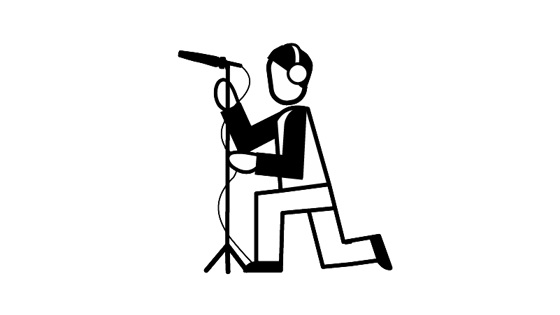
Sound trainees help unload the sound van, check that all the equipment is prepared and move the sound trolley, kit boxes and boom equipment when required by the sound mixer. A more experienced trainee might, under close instruction of an assistant, help with the attaching of radio mics or use the boom microphone to record background sounds.
They are often asked to be responsible for making sure the rest of the crew is keeping quiet at the necessary moments. They also take messages to other departments. They might go offset to talk to costume about where to hide a microphone, for example.
At the end of each shooting day, they help pack up, make sure the rushes are correctly labelled and that all the paperwork is handed over to the production office. Sound trainees make the tea and order extra supplies of whatever is needed.
Watch and read
- Behind The Scene with the Sound Team from 'Adolescence'
- Sound recordist Daniella Smith
- How to make the most of your first job
What’s a sound trainee good at?
- Hearing: be able to hear precisely, concentrate on listening to sound in a distracting environment
- Sound and equipment: know how sound moves, understand electronics, microphones, recording, playback and editing gear
- Watching film and TV drama: have a passion for the genre and a love of the industry
- Learning by watching and asking: be able to observe what’s happening and ask questions at the appropriate moments
- Reliability: get to set on time
- Communication: be able to follow instructions from the sound mixer and listen to and share information with other departments and members of the team such as costume and make up
Who does a sound trainee work with?
Sound trainees report to the sound mixer. They also work with the boom operator and the entire sound department.
How do I become a sound trainee?
The key thing is to have a passion for sound, be it through being a musician, DJ or sound engineer in live music or radio. Once you’ve got some experience of producing sounds or music under your belt, you can to apply to ScreenSkills’ Trainee Finder.
At school or college:
To go to university for a sound-related course, you might want to study A-levels or Highers in maths, physics and music. Or you might want to take a Level 3 qualification in electrical or sound engineering, music or media. Have a look at what your local college offers such as:
- BTEC National Diploma in Music
- BTEC National Diploma in Sound Production
- OCR Technical Diploma in Digital Media (Moving Image & Audio Production)
- UAL Diploma/Extended Diploma in Music Performance and Production
- T level Media, Broadcast and Production
Get a degree:
It’s not necessary to have a degree, but you might want one in sound engineering or music technology. Have a look at ScreenSkills’ list of recommended courses in film and TV. We recognise courses with our ScreenSkills Select award where they offer training in the relevant software, dedicated time to building a portfolio and have strong links with the film and TV industries.
Get an apprenticeship:
Apprenticeships are jobs with training, so they’re a great opportunity to earn while you learn. However, it can be challenging to find jobs as an apprentice with production companies, as many are not able to take on people for a whole year, which is an apprenticeship requirement at the moment. Although there is now a Creative industries production technician apprenticeship standard. You might be able to find a job through that standard with an employer in another sector, such as the theatre. Think about taking that job, learning the core skills of sound and transferring those skills into film and TV drama at a later point.
Before taking any apprenticeship, check what you’ll be learning with your prospective employer and college, so you can be sure it will be giving you the skills you want. Check out What’s an apprenticeship? to learn more about apprenticeships and Find an apprenticeship to learn how to find one in your region, or approach companies directly. Go to ScreenSkills information on apprenticeships for the main apprenticeship schemes in film and television.
Become a trainee:
Apply to be on ScreenSkills’ Trainee Finder scheme. Get the skills, make contacts and start working in the sound department.
Build a portfolio:
Create work that you can show off to employers. This is essential. Go to Build your music portfolio and Build your sound portfolio to learn how.
Take a short course:
Take the National Film and Television School’s short course in location sound recording. Go to the list of training courses recommended by ScreenSkills and search for "sound".
Volunteer:
Work for hospital radio. See what kit is used. Practise recording and editing sound wherever you can.
Make films:
Do the sound on student productions. Make a showreel of your work and build your sound portfolio. This is evidence of your practical skills and creativity that you can show admissions tutors and employers.
Get a job in a kit-hire company:
This will give you experience in handling the equipment and also help you make contacts in the industry. Read ScreenSkills advice on how to approach employers.
Meet people in the industry:
Go to ScreenSkills’ events, follow your local film office and any local community arts and media organisations and attend their events. Go to how to network well for some tips.
Network online:
Create a LinkedIn profile. See if there’s a Facebook page or other social media group for people making films or videos in your area. Join it and take part. Create a ScreenSkills profile.
Explore ScreenSkills Resources:
ScreenSkills careers information:
The your career hub has a wealth of resources designed to help you start or progress your career.
ScreenSkills e-learning:
ScreenSkills has a suite of free e-learning modules for those who are over 18 which can improve your knowledge. The ScreenSkills Passport modules also prepare you as they are essential for some production roles. Some modules are available for those under 18. For anyone wanting advice about first steps, the Getting into the screen industries modules are very useful.
ScreenSkills skills checklists:
If you would like more detail about the tasks, responsibilities and skills required for many key roles in film and TV drama, children’s TV and unscripted TV you can look at our skills checklists.
You might also be interested in…
Sound assistants are needed in unscripted TV, commercials and corporate and music videos. You will be able to get experience and stay employable if you work in these areas as well as film.
You might also want to move into post-production and become a sound designer or a dubbing mixer or work in ADR (automated dialogue replacement, re-recording speech in a studio after filming).
Further resources
- The Association of Motion Picture Sound (AMPS)
- Institute of Professional Sound (IPS)
- The Audio Engineering Society
- Community Media Association
- Hospital Broadcasting Association
- Professional Lighting and Sound Association (PLASA)
- Screen Scotland
- Zaxcom
- Broadcast
- Empire
- Screen Daily
- Box Office Mojo
- ScreenSkills resources directory