Film and TV drama
Hair and make-up designer (Film and TV Drama)
Also known as: Hair designer, Make-up designer
What does a hair and make-up designer do?
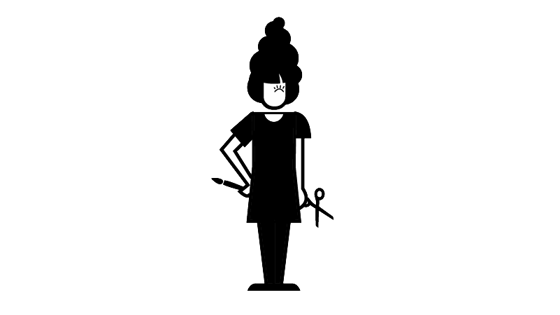
In film and TV drama, hair and make-up designers help actors portray their characters by using hair and make-up to create a look.
In pre-production, they work closely with the director to understand the style of the story. They break down the script, noting the hair and make-up requirements at each point and working out who they need to recruit to the team.
They make appointments for actors' wig fittings, prosthetic and dental appointments. They draw up notes about actors, detailing each scene’s hair and make-up changes (these notes are vital for maintaining continuity throughout the production) and work with the camera department on test shots to see how the hair and make-up looks under different lighting conditions.
During production, they are one of the first to the set in the mornings, leading the team, keeping everyone to schedule and managing the budget.
On larger features and in the USA, hair and make-up designers are two separate roles. On smaller productions, they are combined.
Watch and read
What’s a hair and make-up designer good at?
- Hair and make-up: be adept in the craft of cutting and colouring, wigs, extensions and beards, glamour make-up, corrective make-up, ageing face, hands and neck
- Hair and make-up history: know the story of hair and make-up throughout the ages, be able to research
- Styling: understand the director’s vision, know what that means for hair and make-up, have a good eye for the look
- Communication: share the vision of the style with team members, be the liaison between the director and the rest of the team, put actors at ease
- Organisation: break down a script into hair and make-up requirements, schedule the hair and make-up needs, manage the team, budget and daily call sheet
Who does a hair and make-up designer work with?
On large productions, the roles of make-up artist and hairdresser are separate. Chief make-up artists work closely with costume designers and hairdressers to ensure that each actors' look complements every aspect of the script. Having created individual designs they make sure that actors are comfortable with their look and note any allergies or sensitivities. They recruit a team of make-up artists and distribute briefs and continuity notes. During shooting, they supervise the make-up process and may work as a personal make-up artist for a principal actor.
Likewise, chief hairdresser is a separate role from chief make-up artist on big budget features. The chief hairdresser reads the script to determine each actors’ styling and then recruits and briefs a team of hairdressers. During shooting, they supervise the whole hairdressing department and may work as a personal hairdresser if requested by one of the principal actors.
Increasingly, artists are expected to be skilled in both hair and make-up. They apply make-up, wash, cut, blow-dry, style and set hair, apply products using specialised techniques to create specific designs. They also set and dress wigs and hairpieces and work with facial hair and false pieces, such as beards and moustaches. They may also apply special effects make-up such as grazes, cuts and bruises and bald caps. Make-up and hair artists usually accompany performers on set and standby during scenes to touch-up makeup and ensure continuity is maintained.
In make-up, prosthetics are special effects, like werewolf faces, or bruises, cuts and grazes. Prosthetic artists are responsible for creating these. They break down a script and analyse what prosthetics are needed for what character. They estimate the time and cost of making prosthetics and create bald caps, prosthetics pieces, facial parts and scars, depending on the script. Normally prosthetic artists will apply the prosthetics to performers themselves (which can take hours) with the help of make-up artists and assistants. They usually stand by on set to ensure that the prosthetic is working and looked after.
Assistants help hair and make-up artists by supplying brushes and products, helping fix prosthetics, washing actors’ hair, helping to alter, repair and dress wigs and toupees, running errands, and making sure that performers are well looked after. They prepare the actor’s skin and scalp in advance, and make sure that any allergies or sensitivities are taken into consideration. Assistants are also involved in crowd days by preparing facilities, working on the hair and make-up of large numbers of extras, standing by on set to maintain continuity and may even be given responsibility for minor characters.
Hair and make-up trainees set up the work stations. See separate profile: hair and make-up trainee
How do I become a hair and make-up designer?
Hair and make-up designers usually enter the industry through one of three routes. Some come from hairdressing and barbering. Others come from beauty-therapy backgrounds. Others come from stage and theatre hair and make-up backgrounds. There are several different ways to get qualified before entering the industry. Once you have one of the following qualifications, you can apply to ScreenSkills’ Trainee Finder or find other ways of getting into the industry.
At school or college:
Take one of the following Level 3 qualifications such as:
- VTCT Diploma in Theatrical and Media Make-up
- City & Guilds Advanced Technical Diploma in Theatrical, Special Effects and Media Make-up Artistry
- City & Guilds Advanced Technical Diploma in Barbering
- City & Guilds Advanced Technical Diploma in Hairdressing
- City & Guilds Advanced Technical Diploma in Media Make-up Artistry
- City & Guilds Diploma in Barbering
- City & Guilds Diploma in Hairdressing for Colour Technicians
- City & Guilds Diploma in Hairdressing for Cutting and Styling Technicians
- City & Guilds Diploma in Women’s Hairdressing
- VTCT Diploma in Hairdressing for Colour Technicians
- VTCT Diploma in Theatrical and Special Effects and Hair and Media Makeup
- VTCT Diploma/Extended Diploma in Beauty Make-up Techniques
- VTCT Diploma/Extended Diploma in Hairdressing
- VTCT Diploma/Extended Diploma in Barbering
- VTCT Combined Diploma in Hairdressing
Get an apprenticeship:
An apprenticeship is a job with training, so it’s a great opportunity to earn as you learn. In the past, it has been challenging to find jobs as an apprentice within production companies, although there is now a Hair, wigs, make-up and prosthetics technician specifically designed for people working in theatre or film and TV. It might also be worth looking for a job as an apprentice. This will help you develop your craft and create a body of work for a portfolio that you can use to find your way into film and TV drama at a later point. Check out What’s an apprenticeship? to learn more about apprenticeships and Find an apprenticeship to learn how to find one in your region, or approach companies directly. Go to ScreenSkills information on apprenticeships for the main apprenticeship schemes in film and television.
Get experience:
Work on a make-up concession. Get a part-time job in a hair salon or barbershop. Volunteer to do hair and make-up for student films or amateur theatre. The more time you can spend doing hair or make-up the better.
Become a trainee:
Apply to be a hair and make-up trainee. Get onto ScreenSkills’ Trainee Finder scheme. This will help you make the contacts and build up the industry knowledge to get work in the art department of a film or TV drama.
Build a portfolio:
This is essential. Go to Build your hair and make-up portfolio for details of how to do this.
Take a short course:
Hone your skills in hair and make-up by taking a specialist course. Go to the list of training courses recommended by ScreenSkills and see if there is one in prosthetics, barbering, wig-fitting or period hair styling. If you have a specialism, it will make you extra handy. We recognise courses with our ScreenSkills Select award where they offer training in the relevant software, dedicated time to building a portfolio and have strong links with the film and TV industries.
Meet people in the industry:
Go to ScreenSkills’ events, follow your local film office and any local community arts and media organisations and attend events. Go to how to network well for some tips.
Network online:
Create a LinkedIn profile. See if there’s a Facebook page or other social media group for people making films or videos in your area. Join it and take part. Create a ScreenSkills Profile.
Explore ScreenSkills Resources:
ScreenSkills careers information:
The your career hub has a wealth of resources designed to help you start or progress your career.
ScreenSkills e-learning:
ScreenSkills has a suite of free e-learning modules for those who are over 18 which can improve your knowledge. The ScreenSkills Passport modules also prepare you as they are essential for some production roles. Some modules are available for those under 18. For anyone wanting advice about first steps, the Getting into the screen industries modules are very useful.
ScreenSkills skills checklists:
If you would like more detail about the tasks, responsibilities and skills required for many key roles in film and TV drama, children’s TV and unscripted TV you can look at our skills checklists.
You might also be interested in…
Hair and make-up artists are in demand for music videos, corporate films, fashion and advertising.