Animation
Layout artist (Animation)
Also known as: Previs (pre-visualisation) artist, 2D layout artist, 3D layout artist
What does a layout artist do?
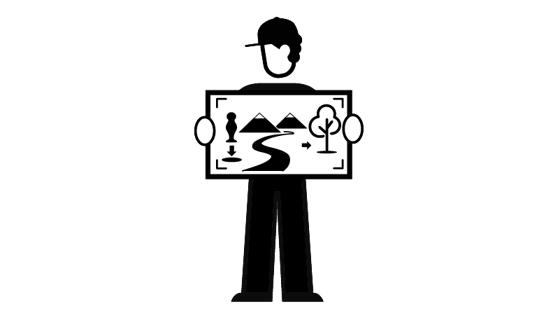
Layout artists begin their work at the start of an animation production, after the storyboard and the look of the project have been agreed upon. Layout artists determine the depth and perspective of what is displayed on screen. The way that this is achieved varies depending on the kind of animation being produced.
In traditional 2D hand-drawn animation, layout artists define the perspective of the animation frames by drawing the backgrounds. The relative size of the objects in the background of a flat image, as compared to the action in the foreground, influences how viewers perceive the scene. How large or small characters or other aspects of an animated scene appear to be influences how the audience feel. 2D layout artists base what will appear in the image on the storyboard, but they more clearly define what appears in an animation frame.
In 3D animation, layout artists are the directors of photography (DoPs) in a virtual space. A DoP in a live-action movie makes decisions about lenses, camera angles and camera movements. In a 3D animation, the layout artist makes the same decisions, but with a virtual camera within 3D animation software.
3D layout artists listen to the director to learn the desired style of virtual photography for the animation. Then they work from storyboards and tidy up the rough versions of the animation (known as animatics). They work out the timing and the placement of the characters at key points within each shot. This is known as blocking. They aim to keep a consistent scale to the elements within the frame, always working out how best to tell the story. They do a rough version of the lighting and produce the shots.
In stop-motion animation, there are no layout artists because this animation form is photographed by physical cameras and, therefore, there are actual DoPs.
Layout artists can be employed by animation studios.
It is critical to understand the story and emotion of the sequence before placing cameras into the scene. Without this, a camera is only a spectator in the scene, not a storyteller
Watch and read
- What is a 3D Layout Artist | Exploring the Magic behind Animation Cameras
- Layout & Final Layout
- Animation Layout Artist: The Complete Career Guide
What's a layout artist good at?
- Art: be able to draw, have an eye for composition, know what looks good and why
- Photography: understand camera and lighting techniques, know how to use them to affect emotions, know how to tell a story through a shot
- Communication: work with the director, be able to pick up an idea from storyboard artists and share your work with other artists
- Animation and art programs: be adept at using relevant programs such as Photoshop and TVPaint, as well as After Effects, Blackmagic Fusion, Maya, Mental Ray, Nuke, RenderMan and 3ds Max
- Watching animations, feature films and media: have a passion for the medium of animation, a love of the industry and a broad interest in film and TV
Who does a layout artist work with?
Layout artists work with the storyboards that have been produced by the storyboard artists. Layout artists work closely with the director to translate storyboards and animatics into polished frames and to decide on the virtual camera ‘language’ of a project. Layout artists’ work is critiqued by the art director before the layouts go to be painted by the background painters. The work that layout artists do to position the character models in the frames of the scenes gives the animators a starting point from which to work.
How do I become a layout artist?
As with any technical art role in the animation industry, it’s important that you have good artistic skills in drawing, painting and illustrating. Further, to be a layout artist, you need to have some experience using animation and arts computer software, such as Photoshop and TVPaint, as well as After Effects, Blackmagic Fusion, Maya, Mental Ray, Nuke, RenderMan and 3ds Max. That said, some companies offer this training to the right candidate.
At school or college:
An ideal background to this role is the combination of drawing skills with science. If you can take A-levels or Highers in maths, computer science, biology or physics and add art or art and design to the mix, it’s ideal. Or you might want to take a level 3 vocational qualification in those subjects. Look at what your local college offers such as:
- OCR Technical Diploma in Digital Media (Moving Image and Audio Production)
- UAL Diploma/Extended Diploma in Creative Media Production and Technology
- OCR Cambridge Technical Diploma/Extended Diploma in Performing Arts
- BTEC National Diploma/Extended Diploma in Performing Arts
- T level Media, Broadcast and Production
- T level Digital Software Development
Get an apprenticeship:
An apprenticeship is a job with training, so it’s a great opportunity to earn as you learn. See if you can find an apprenticeship as a junior 2D artist, junior 3D artist, VFX artist or assistant technical director. Even if you can’t find a role in animation, if you keep up your passion for the industry, you might be able to transfer your skills into animation at a later point. Check out What’s an apprenticeship? to learn more about apprenticeships and Find an apprenticeship to learn how to find one in your region, or approach companies directly.
Build a portfolio:
Learn art and video editing software, experiment with practical stop-motion and start creating work that you can show to admissions tutors or employers. Create your own animatics; this is a good way to familiarise yourself with many aspects of the animation filmmaking process. This is essential. Go to Build your animation portfolio to learn how.
Get a degree:
Have a look at ScreenSkills’ list of recommended courses and select one in animation. We recognise courses with our ScreenSkills Select award where they offer training in the relevant software, dedicated time to building a portfolio and have strong links with the animation industry.
Draw, paint and illustrate:
Practise drawing, among other art forms, with a focus on anatomy and movement. Be aware of weight and timing when drawing from live subjects (or videos of them).
Take a short course:
Hone your skills in animation or being a layout artist by taking a specialist course. Go to the list of training courses recommended by ScreenSkills and see if there is one based in in the animation industry, or, look to for a course in cinematography, as the planning of good camera shots is transferable to this role.
Search for jobs:
Research animation companies that you’d like to work for. Animation UK has a directory of animation companies. Go to their websites and check if they are advertising for junior layout artist roles. You can also send in a speculative CV and ask employers to keep it on file so they can consider you if any suitable jobs come up. Search job websites for layout artist roles and apply for positions.
Meet people in the industry:
Go to ScreenSkills’ events, follow your local film office and get to know people in the animation industry by attending events. Meet industry professionals and ask them questions about their work, while demonstrating interest and knowledge in the industry. Offer to provide them with your professional contact details and try to stay in touch with them. Go to how to network well to learn how to do this.
Network online:
Create a LinkedIn profile. See if there’s a Facebook page or other social media group for people making films or videos in your area. Join it and take part. Create a ScreenSkills profile.
Explore ScreenSkills Resources:
ScreenSkills careers information:
The your career hub has a wealth of resources designed to help you start or progress your career.
ScreenSkills e-learning:
ScreenSkills has a suite of free e-learning modules for those who are over 18 which can improve your knowledge. The ScreenSkills Passport modules also prepare you as they are essential for some production roles. Some modules are available for those under 18. For anyone wanting advice about first steps, the Getting into the screen industries modules are very useful.
ScreenSkills skills checklists:
If you would like more detail about the tasks, responsibilities and skills required for many key roles in film and TV drama, children’s TV and unscripted TV you can look at our skills checklists.
You might also be interested in...
Being a background designer or artist or being a storyboard artist. You might be interested in being a layout technical director (TD) in the VFX sector. You might also be interested in working in the games industry for a development studio in a similar capacity as an animation layout artist, but for games cinematics.